12:00 – 12:10 | Welcome Address | Katie McKinley VP, Clinical Applications Indica Labs | |
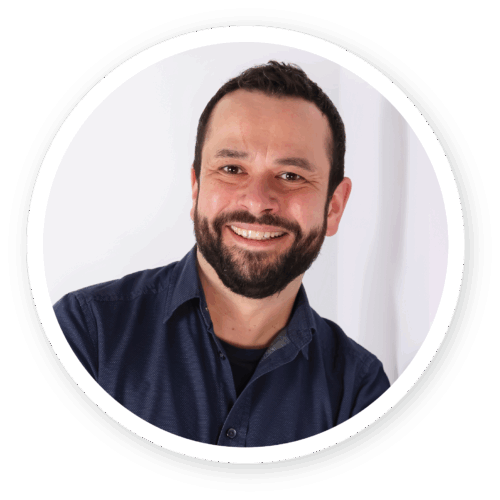
12:10 – 12:30 | Embedding HALO and HALO AI into HALO AP® Workflows | Fatlum Hasaj Applications Specialist, Clinical Indica Labs Abstract This session will explore how embedding HALO and HALO AI into HALO AP® enables teams to share AI algorithms with pathologists in a controlled, review-ready environment. Whether automated or manually triggered, these tools are designed to be “ready-to-run,” offering unmatched flexibility for diverse workflow requirements.
Biography Fatlum is a Clinical Application Specialist at Indica Labs, specializing in HALO AP. He supports clinical teams from initial implementation through go-live, guiding the integration of HALO AP with laboratory information systems and streamlining workflow efficiency. Fatlum also delivers hands-on training to ensure seamless adoption of digital pathology tools. He holds a degree in Biomedical Science and previously worked at Oxford University Hospital, where he led key initiatives in implementing digital pathology solutions. | |
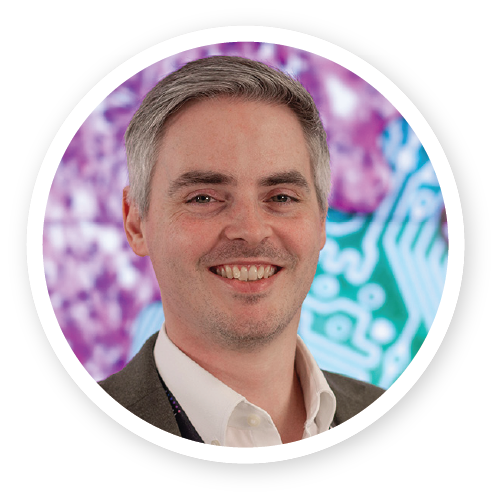
12:30 - 12:50 | Overview of Indica's HALO Clinical AI and Future Roadmap | Dr. Peter Caie Sr. Principal Scientist, AI Diagnostics Indica Labs
Abstract This presentation will give an overview of our current HALO Clinical AI portfolio. We will cover the products and our development and validation strategies. The talk will also give an overview of our future roadmap and collaborative work with our partner Leica Biosystems. During the talk, you will:
• Understand the current HALO Clinical AI portfolio • See how we develop and validate our products • Learn what is coming next in the Clinical AI field for Indica Labs
Biography Peter Caie worked for 9 years as a Senior Scientist at AstraZeneca before completing his PhD from the University of Edinburgh in Cancer Pathology. He went on to run the Quantitative and Digital Pathology (QUAD) Lab at the University of St Andrews where his research focused on artificial intelligence, cancer prognosis, and diagnosis in the field of digital and molecular pathology. Currently, Dr Caie is a Senior Principal Scientist at Indica Labs where he manages the AI Diagnostics group which develops commercial AI products designed for deployment in both the clinical and life science fields. | |
12:50 - 13:20 | A Seamless Digital Transformation with HALO AP® and LIMS Integration | Dr. Reuben Borg Consultant Pathologist Mater Dei Hospital
Abstract This presentation outlines the deployment of our digital pathology system, focusing on the system selection process, the parallel implementation of a new laboratory information management system (LIMS), and the seamless integration of both platforms. The session will review the challenges and successes of the tendering phase, highlighting how this selection process ensured a robust selection of vendors and technologies.
Key topics include the technical and operational integration between HALO AP® and the LIMS, with emphasis on quality control (QC) mechanisms for immunohistochemistry and histology labs. We will discuss how these integrations have streamlined workflows, and improved turnaround times, while maintaining QC standards.
The presentation will also explore our current plans to transition to digital requests, eliminating the need for physical slides and paper forms. This shift enables a fully digital workflow, enhancing efficiency, traceability, and collaboration across departments. By sharing our experiences and lessons learned, we aim to provide actionable insights for institutions considering similar digital transformations in pathology
Biography Dr Reuben Borg is a Consultant Pathologist at Mater Dei Hospital, Malta, and a Visiting Lecturer at the University of Malta. He graduated in Medicine from the University of Malta and specialized in pathology in Scotland, where he also obtained an MSc in Molecular Pathology from the University of Glasgow and is a Fellow of the Royal College of Pathologists in London.
Dr Borg has been heavily involved in two digital pathology deployments, including Malta’s first digital pathology service at Mater Dei Hospital. Apart from his clinical work, he focuses on the integration of LIMS and IMS systems, the development of digital workflows, and the implementation of quality control in pathology, with a keen interest in advancing digital solutions for clinical practice. | |
13:20 - 13:40 | Coffee Break | | |
13:40 - 14:10 | NPIC’s National Digital Pathology Research Platform for NHS Secure Data Environments | Dr. Alex Wright Head of Research Infrastructure National Pathology Imaging Co-operative Leeds Teaching Hospitals NHS Trust
Abstract The National Pathology Imaging Co-operative (NPIC) based at Leeds Teaching Hospitals NHS Trust is working to digitise pathology imaging across England using a centralised PACS environment. As part of this work, an additional dedicated research environment has been created to receive deidentified copies of routine clinical pathology image data for research – supporting projects and collaborations with academics, healthcare professionals and industry partners across the globe. By utilising HALO Link for image management and AI deployment, we are now scaling up our research platform to support NHS Secure Data Environments (SDEs), to supply them with high quality digital pathology data. Supported by the NHS England Data for Research and Development programme, the platform is being built to provide safe access to large imaging datasets - supporting clinical trials, research cohort discovery, and the development of AI tools. This talk will give a background to the NPIC programme, an overview of the infrastructure used to support the demands of both of clinical and research activity, and outline how we are utilising HALO Link to manage large scale digital pathology imaging data from various sources to support a diverse range of research projects.
Biography Alex has been working in digital pathology since 2006, developing image analysis algorithms and AI-powered diagnostic tools, using digitized histopathology slides. He completed his PhD in 2018, with his Thesis: “Automated analysis of colorectal cancer“.
After joining NPIC in 2021, he worked on the development and migration of the NPIC National Clinical PACS solution, before changing focus to lead the development of NPIC’s Research and AI systems.
Alex has worked on a wide variety of projects across all of the NPIC themes, including developing the technical infrastructure of both the clinical and research digital pathology solutions, the installation of the AI FORGE and its scanners, various research and development projects, such as the QCC Point of Use Quality Assurance tool, as well as creating the NPIC center, website and branding.
Currently, Alex is responsible for the development of NPIC’s national Secure Data Environment platform and leads the NPIC AI Scientist team, who are working to deploy and evaluate AI in the clinical setting.
In addition to AI research, Alex is responsible for developing the University of Leeds Virtual Pathology website and infrastructure, which hosts thousands of educational resources, attracting millions of visitors per year. | |
14:10 - 14:30 | Unlock Cell Population Discovery Using HALO Dimensional Analysis | Dr. Ghislaine Lioux Sr. Field Applications Scientist Indica Labs Abstract With multiplexed imaging now routine in digital pathology, extracting meaningful insights from complex datasets is more crucial than ever. Without advanced tools capable of handling numerous biomarkers, key phenotypic patterns and novel cell populations could easily go unnoticed.
The HALO High Dimensional Analysis module addresses this need by seamlessly integrating dimensionality reduction and unsupervised clustering into an intuitive software ecosystem.
During the talk, you will:
• Understand the challenges of analyzing multiplexed imaging data and how high-dimensional techniques address them • Learn how clustering and dimensionality reduction workflows operate within HALO • See how the module’s dynamic link back to original images enables you to validate discoveries in their precise spatial context
Biography Dr. Ghislaine Lioux is a Senior Field Application Scientist at Indica Labs. Ghislaine earned her PhD from the Spanish National Institute of Cardiovascular Research in Madrid as a Marie Curie Fellow, where she studied molecular mechanisms of heart development. | |
14:30 –15:00
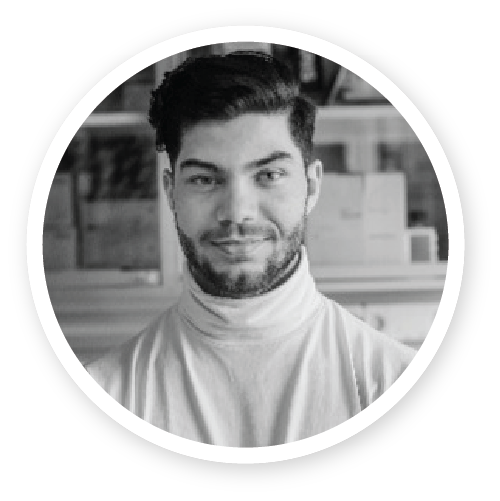
| Leveraging HALO and HALO AI for Spatial mRNA Expression Analysis in Bone Tissue | Dr. Bilal Mohamad El-Masri Postdoctoral Researcher Dept. of Pathology, Odense University Hospital/Dept. of Clinical Research, University of Southern Denmark, Odense Denmark Abstract Understanding how bone cells coordinate the activation of bone-degrading osteoclasts is key to advancing treatments for skeletal disorders. In this presentation, Bilal El-Masri demonstrates how HALO and HALO AI were used to analyze the spatial mRNA expression of key cytokines and uncover the cellular mechanisms driving osteoclast activation.
By combining single- and multiplex in situ hybridization with AI-powered image analysis, spatial expression patterns of cytokine mRNAs were quantified and mapped across bone compartments. Contrary to long-standing assumptions that matrix-embedded osteocytes act as primary activators, the spatial data revealed that bone surface cells predominantly express activating cytokines, while inhibitory cytokine signals originate mainly from embedded osteocytes.
Through precise cell classification, quantification, and spatial mapping, HALO provided the analytical power needed to visualize complex cytokine signaling within bone tissue. This work highlights how HALO and HALO AI can transform tissue-based research by providing deeper biological insight and enabling new discoveries in spatial biology.
Biography Bilal El-Masri is a life scientist specializing in spatial gene expression and AI-powered histology. He completed his doctoral studies at the Molecular Bone Histology Lab, University of Southern Denmark, where he investigated how cytokine signaling shapes osteoclast activation within bone tissue.
During his PhD, Bilal integrated multiplex in situ hybridization, immunohistochemistry, and advanced image analysis workflows in HALO and HALO AI to map cytokine expression at cellular resolution. His work revealed new insights into how bone surface cells regulate osteoclast activity – reshaping current understanding of bone remodeling dynamics.
Bilal has also been affiliated with the Danish Spatial Imaging Consortium (DanSIC) and conducted a research stay at Hospital, Harvard Medical School, where he expanded his expertise in imaging and single-nuclei transcriptomics. Today, he continues to apply AI-driven image analysis to bridge translational research and clinical collaboration, advancing precision research and spatial biology applications. | |
15:00 - 15:20 | Coffee break |
| |
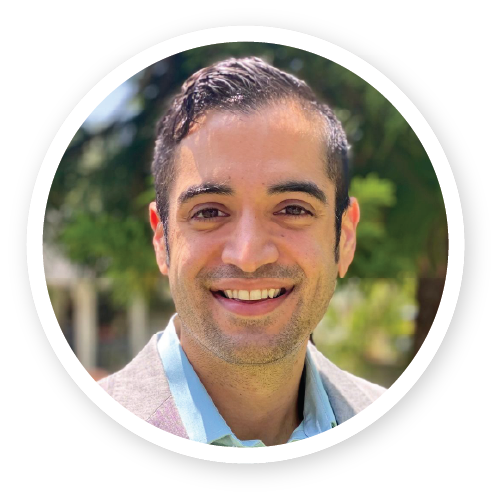
15:20 – 15:40 | Quantitative In Situ Analysis with HCR™ RNA and Protein Imaging: Expanding Discovery with HALO | Dr. Aneesh Acharya Chief Commercial Officer Molecular Instruments
Abstract HCR™ products enable high-performance, quantitative visualization of RNA and protein targets directly within FFPE tissue. This presentation will highlight recent advances in the HCR™ platform—including the HCR™ HiFi Encoder for next-generation multiplex protein imaging and short-target detection chemistry for RNA analysis—that expand the scope of in situ workflows across research and translational applications. Together, these chemistries deliver multiplexed, background-suppressed detection with high signal fidelity and compatibility across diverse tissue types and fixation conditions.
We will demonstrate end-to-end workflows integrating HCR™ Imaging with Indica Labs’ HALO software for automated quantification and spatial analysis of RNA and protein expression. These methods support reproducible, data-rich insights at cellular resolution and enable comparative studies across targets and tissue contexts.
This session emphasizes practical applications and analytical integration, focusing on strategies for generating high-quality, quantitative imaging data from FFPE samples using combined HCR™ and HALO workflows to support biomarker discovery and validation in tissue-based
Biography Aneesh Acharya is the Chief Commercial Officer of Molecular Instruments, where he leads the strategy and development of next-generation HCR™ technologies for research and clinical applications. Since 2020, he has guided the creation of multiple product innovations including HCR™ Gold, HCR™ Pro, the HCR™ HiFi Encoder, and the company’s short-target detection chemistry—advancing the performance, multiplexing, and translational reach of HCR™ imaging.
Aneesh’s scientific foundation was established during his PhD in Bioengineering at the California Institute of Technology, where he played a foundational role in developing HCR™ RNA flow cytometry and HCR™ microRNA-FISH. His work bridges technical invention and product strategy, shaping how molecular imaging tools move from discovery to application.
Before joining Molecular Instruments, Aneesh advised health technology and life sciences companies as a management consultant. He earned his BS in Biomedical Engineering, summa cum laude, from Boston University and his PhD in Bioengineering from Caltech.
| |
15:40 - 15:55 | Pharma Services: AI-powered, Quantitative Image Analysis Services from Discovery to Clinical Trials
| Doug Bowman VP, Pharma Services Indica Labs Abstract Our Pharma Services team is an experienced multidisciplinary team that develops AI-powered image analysis workflows to support your preclinical and clinical studies. Building image analysis and AI solutions to support these studies requires multi-subject matter expertise and considerable resources. Developing a strategy that involves a combination of in-house resources and outsourcing allows customers to focus on the key scientific questions to drive their biomarker studies forward.
This presentation will provide a brief introduction of the group, introduce new capabilities, and highlight two AI workflows: analysis of ADC target expression and bystander effect, and workflows for scaling AI training using ground-truth annotations from same section mIF or IHC
Biography Doug is responsible for Indica Labs’ Pharma Services group which provides AI-driven quantitative histopathology image analysis services to support customer’s preclinical and clinical biomarker assays. He also develops strategic business relationships to support the services business. Prior to Indica Labs, he spent 12+ years at Takeda Pharmaceuticals where he developed and expanded the tissue-based imaging capabilities to support early discovery, translational, and clinical programs. Doug has a BSE in Biomedical and Electrical Engineering from Duke University. | |
15:55 – 16:00 | Closing Remarks | Katie McKinley VP, Clinical Applications Indica Labs | |
16:00 - 17:00 | Drinks Reception |
| |