Spatial Analysis

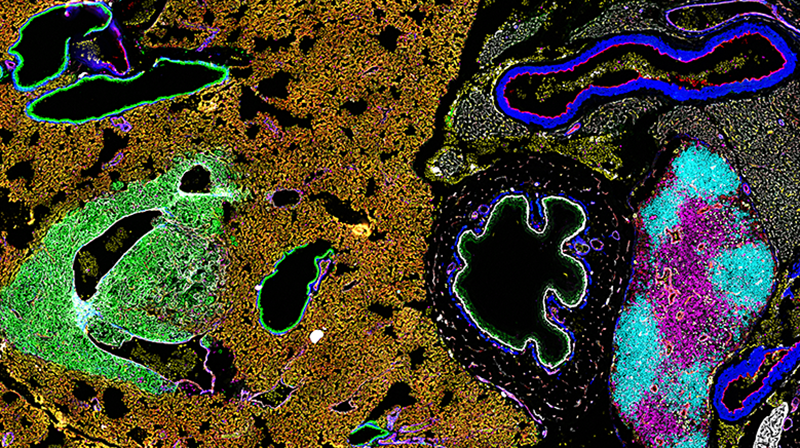
Optimizing quantitative analysis of highly multiplexed CODEX images in HALO

31 March 2022 | In this webinar, Dr. Noemi Kedei, a staff scientist at the Collaborative Protein Technology Resource core of the Center for Cancer Research (CCR) at the National Cancer Institute, will present a comprehensive CODEX workflow, from image acquisition to image processing and HALO image analysis. Dr. Kedei leads the core facility that provides this technology as service to CCR investigators, including project consultation and design, antibody panel customization, tissue staining and imaging, image processing, and data management. Since Dr. Kedei and team were an early adopter of the CODEX platform, they have acquired deep expertise in CODEX, having imaged hundreds of mouse and human fresh frozen and FFPE tissues in support of multiple NCI/CCR projects.

Optimizing quantitative analysis of highly multiplexed CODEX images in HALO Read More »
Tumor-specific tumor-resident cytotoxic T cells predict recurrence in stage III melanoma patients treated with adjuvant immunotherapy

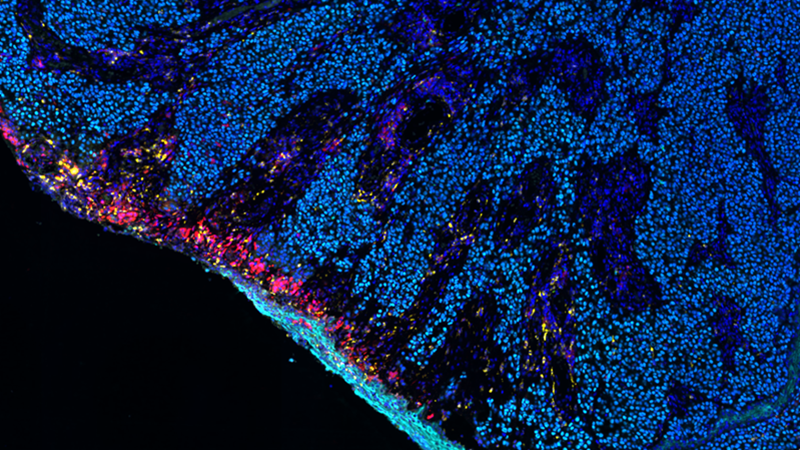
20 January 2022 | In this 60-minute webinar, learn how HALO and HALO AI collaborate to perform tissue and cell segmentation, quantification of T-cell subsets in tumor regions, and spatial analysis .

Tumor-specific tumor-resident cytotoxic T cells predict recurrence in stage III melanoma patients treated with adjuvant immunotherapy Read More »

Bench-to-Bedside Transition of Novel HALO® Assays into Clinical Trials with HALO AP®

10 December 2021 | In this 1-hour webinar, featured speakers will demonstrate end-to-end how to develop a quantitative assay in HALO and transition it into clinical trials using HALO AP.

Bench-to-Bedside Transition of Novel HALO® Assays into Clinical Trials with HALO AP® Read More »

Spatial Biology: Revolutionizing Tissue Imaging and Analysis Using Spatial profiling

23 September 2021 | DigiBase invites you to attend a Spatial Biology webinar symposium to learn from experts in the field on how digital pathology, high-dimensional multiplexing, spatial and AI analytic tools, and spatial transcriptomic technologies are advancing tissue imaging and analysis.

Spatial Biology: Revolutionizing Tissue Imaging and Analysis Using Spatial profiling Read More »

Approaches to Analyzing Skin Tissue using HALO and HALO AI

6 May 2021 | Application Scientist, Natasha Carmell, will discuss and demonstrate workflow approaches for analysing skin sections stained with H&E and immunofluorescence. Using HALO AI we will identify and segment the corneal layer, epidermis, dermis, cartilage, sebaceous glands and lesions in H&E murine auricular tissues, followed by the segmentation of carcinoma from melanoma in fluorescent multiplexed Melanoma tissue. This AI based tissue segmentation will then be combined with biomarker quantification to identify CD8, CD68 and PDL1 positive populations using Highplex FL.

Approaches to Analyzing Skin Tissue using HALO and HALO AI Read More »

Webinar | Digital Pathology in the New Normal: Leveraging HALO® to Investigate a Global Pandemic

21 January 2021 | 8:00 AM – 9:00 AM PST | 11:00 AM – 12:00 PM EST | 4:00 PM – 5:00 PM GMT |
As the world was shutting down in the face of the COVID-19 pandemic, Digital Pathology was thrust to the forefront as a vital option for not only completing existing projects, but more importantly in understanding the disease of COVID-19. Characterizing the mechanisms by which the novel coronavirus attacks the human body, and also understanding the immune system’s response to the disease are critical to guiding treatment and influencing outcomes. Researchers around the world utilized the HALO suite of products to share rare digital pathology slides, collect quantitative pathological data from translational models, characterize gene expression in immune response, and integrate transcriptional data with tissue-based immunoprofiling. This workshop will present some insight on how HALO has been used by researchers at 3 different global institutions to study and characterize COVID-19.

Webinar | Digital Pathology in the New Normal: Leveraging HALO® to Investigate a Global Pandemic Read More »

High Dimensional Spatial Biology: from Discovery to High Throughput Studies

15 September 2020 | 7:00 – 9:00 PDT | 10:00 – 12:00 EDT | 15:00 – 17:00 BST
In this webinar, you’ll learn about the importance of multiplex biomarker analysis including how advances in multiplexed immunofluorescent imaging and analysis can reveal biological and spatial information.

High Dimensional Spatial Biology: from Discovery to High Throughput Studies Read More »

WEBINAR: IT’S ALL ABOUT LOCATION: NOVEL PROGNOSTIC MODELS DERIVED FROM SPATIAL ANALYSIS OF THE TUMOR-IMMUNE INTERFACE

29 July 2020 | 8:00 PDT | 11:00 EDT | 16:00 BST – Biological interactions between functionally distinct immune and tumor cell populations can either promote or inhibit tumor growth. In this 75-minute webinar, we will hear from two research teams who have identified novel prognostic signatures using different spatial analysis and machine learning approaches to measure tumor-immune cell interactions within the tumor immune microenvironment (TIME).

WEBINAR: IT’S ALL ABOUT LOCATION: NOVEL PROGNOSTIC MODELS DERIVED FROM SPATIAL ANALYSIS OF THE TUMOR-IMMUNE INTERFACE Read More »

Virtual US User Group Meeting Presentation: A Digital Pathology Repository for COVID, An Evolving Need

8-11 June 2020 | In lieu of our scheduled onsite user group meetings, Indica Labs is pleased to announce our 2020 US Virtual HALO User Group Meeting.  To make participation easier for our US audience, we will break down the user groups into four one-hour webinars over three days starting at 9 AM PDT/12 PM EDT.

Virtual US User Group Meeting Presentation: A Digital Pathology Repository for COVID, An Evolving Need Read More »

Virtual European User Group Meeting

19-21 May 2020 | In lieu of our scheduled onsite user group meetings, Indica Labs is pleased to announce our 2020 European Virtual HALO User Group Meeting.  To make participation more convenient for our European audience, we are breaking the user group into three one-hour webinars over three days, 19-21st May, starting at 11 AM GMT each day. 

Virtual European User Group Meeting Read More »

Scroll to Top